We use one word, energy, for two completely different experiences. There is the sharp, urgent, slightly tense lift of a strong coffee, and there is the steady, unhurried capability of a good day when you are well rested and well fuelled. They feel nothing alike, they come from different places in your body, and they behave differently over time. Once you can tell them apart, you can stop reaching reflexively for one when you actually want the other.
Stimulant energy: borrowed and spiky
Stimulant energy is what caffeine gives you. It works by blocking adenosine, your fatigue signal, and by nudging cortisol and adrenaline, your stress chemistry. The result is fast, noticeable and useful in short bursts, but it has a characteristic shape: a steep rise, a peak, and a crash as the caffeine clears and the suppressed fatigue floods back. It is borrowed energy. You feel sharper now and you repay it later, often as the mid-afternoon slump. It also tends to come with an edge, a slight tension or jitter, because part of what you are feeling is mild stress activation.
Calm energy: built and steady
Calm energy is a different animal. It is what you feel when your cells are producing energy efficiently and consistently, when you are rested, fed and unhurried. Its currency is ATP, made in your mitochondria, and its signature is a flat, reliable line rather than a peak and a drop. There is no edge to it because no stress chemistry is involved. You are not being whipped along, you are simply capable. It does not announce itself the way a caffeine hit does, which is exactly why people underrate it.
Stimulant energy is borrowed: fast, spiky, edgy, and repaid as an afternoon crash. Calm energy is built: steady ATP from your cells, no edge and no crash. Caffeine produces the first by masking fatigue. Supporting cellular energy and avoiding the stress nudge produces the second. Choose by the shape of day you want.
How to tell them apart in your own body
You already know the difference by feel. Stimulant energy is the one with a slight buzz, a faster pulse, a sense of being pushed, followed hours later by a dip and a craving for more. Calm energy is the one with no buzz and no dip, just a quiet sense that you have what the task needs. If your energy reliably peaks and then collapses, you are running on a loan. If it holds level, you are running on what your cells are actually making.
When each one fits
This is not a sermon against caffeine. A stimulant is a fine tool for a specific job: a short, sharp lift before a hard effort, an early start, a deadline sprint. The mistake is using it as your default all-day fuel, because the spike-and-crash shape works against you over a full day, and the daily reliance erodes the sleep that calm energy depends on. For most ordinary days, a steady floor beats a series of peaks and troughs.
How Daylight is built for calm energy
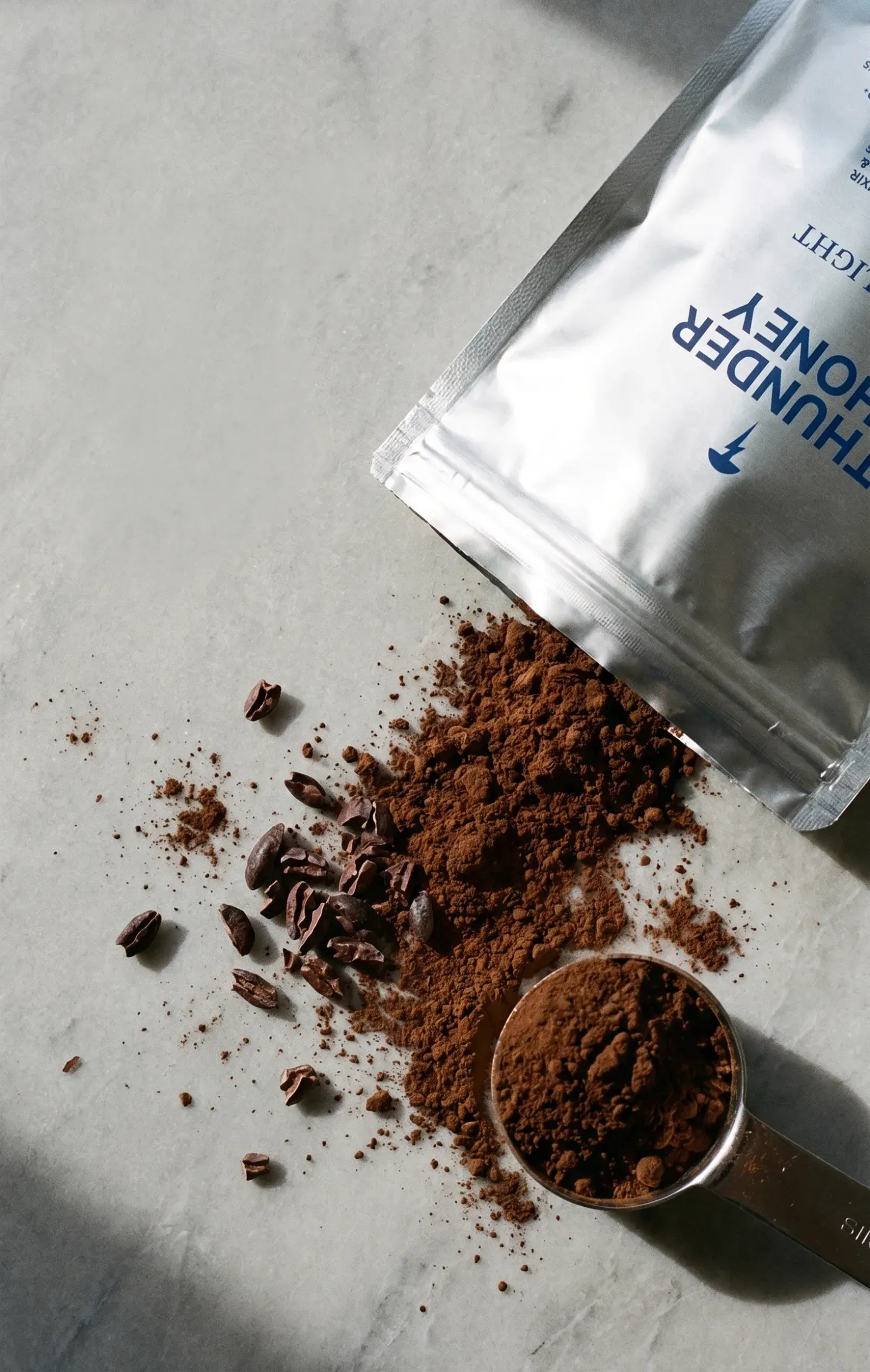
Thunder Honey Daylight takes a different shape from a stimulant. It is made without added caffeine, so there is no adenosine masking and no cortisol nudge. The formula is a stack of 11 actives: cordyceps, a 300 mg nicotinamide riboside dose, L-theanine and a cacao base, each printed on the label with its own milligram amount. Most of these actives carry no authorised EU health claim, so we describe what is in the cup and what the research has explored rather than promising an effect. The part of the formula with an authorised claim is the niacin (vitamin B3) supplied by the nicotinamide riboside: niacin contributes to normal energy-yielding metabolism and to the reduction of tiredness and fatigue. It is served warm and tastes like a homemade hot chocolate.
Stimulant energy is borrowed and spikes. Calm energy is built and holds. Use a stimulant deliberately for short, sharp jobs, but stop relying on it as all-day fuel, because the crash and the sleep cost compound. For most days, support the energy your cells actually make and enjoy the flat, edge-free line that follows.
References
- Fredholm, B. B., et al. (1999). Actions of caffeine in the brain. Pharmacological Reviews, 51(1), 83-133.
- Lovallo, W. R., et al. (2005). Caffeine stimulation of cortisol secretion across the waking hours. Psychosomatic Medicine, 67(5), 734-739.
- Martens, C. R., et al. (2018). Chronic nicotinamide riboside supplementation elevates NAD+ in adults. Nature Communications, 9, 1286.
This article is for educational purposes and is not medical advice. Daylight is a food supplement. If you take prescription medication or are pregnant or breastfeeding, talk to your doctor before starting.