Cordyceps has a strange reputation. Half the internet treats it as a magic endurance pill, the other half dismisses it as a mushroom that grows on caterpillars and therefore cannot possibly be serious. The truth sits in between, and it is more useful than either caricature. Cordyceps does not stimulate your nervous system the way caffeine does. It appears to help the body use oxygen more efficiently, which is a different and quieter kind of help.
What cordyceps is, and which one matters
Two species dominate the conversation. Cordyceps sinensis is the wild, caterpillar-grown original, rare and expensive. Cordyceps militaris is cultivated, consistent, and the species behind most of the credible modern research. This distinction matters because the cultivated form can be standardised for its key compound, cordycepin, while wild-harvested material varies wildly. When a product just says cordyceps with no species and no extraction, you are buying a question mark.
The oxygen-efficiency idea
The mechanism people care about is performance under aerobic load. The proposed pathway is improved oxygen utilisation and better blood flow, which would let working muscle and brain do more with the same breath. This is fundamentally different from a stimulant. A stimulant masks fatigue by blocking your tiredness signal. Cordyceps, if it works as the literature suggests, supports the supply chain behind energy production itself.
What the human studies show
The honest picture: the effect is real but measured, and it favours consistent use. A randomised trial in Journal of Dietary Supplements found that a Cordyceps militaris blend improved tolerance to high-intensity exercise after several weeks, with the clearest gains showing up over time rather than on day one. Older work on high-altitude and aerobic capacity points the same direction. What you do not see in the rigorous data is an instant pre-workout jolt. The benefit is a steadier ceiling, built over weeks.
Cordyceps supports oxygen efficiency rather than stimulating your nerves, which is why it produces a steady floor instead of a spike. The credible research uses cultivated Cordyceps militaris, shows modest endurance gains over weeks, and depends entirely on species, extraction and dose. It is calm energy, not a jolt.
Why dose and extraction decide everything
Cordyceps is wrapped in chitin, the tough fibre that also forms insect shells, and human digestion does not break it down well. Swallowing raw powder leaves most of the active compounds locked in the cell walls. A proper hot-water and alcohol extraction is what releases them. This is why a gram of well-extracted cordyceps can deliver far more than a gram of raw powder, and why the ratio on the label tells you something real about concentration.
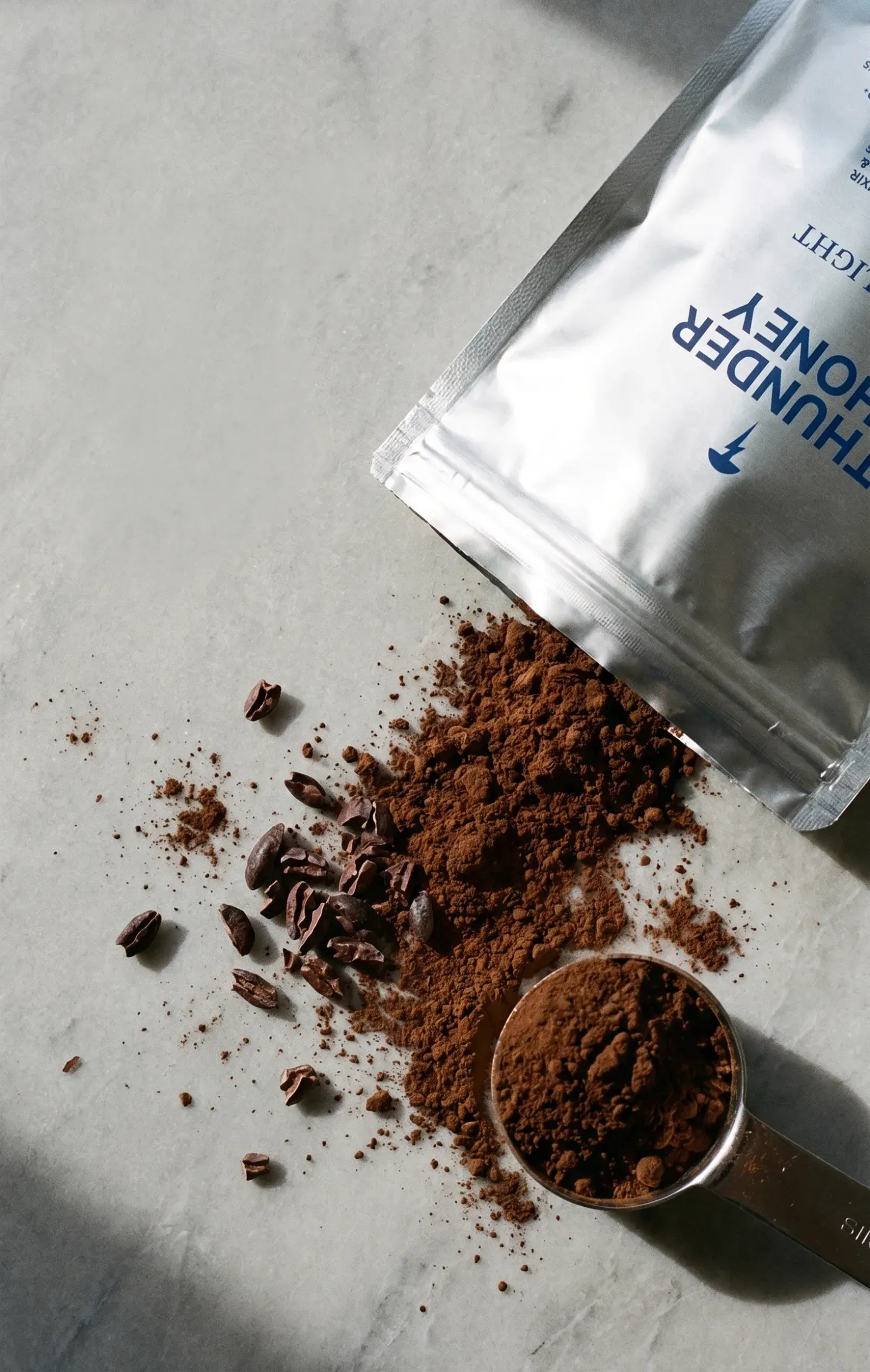
Thunder Honey Daylight uses 1,000 mg of dual-extracted Cordyceps per scoop, meaning ten grams of raw mushroom concentrated into each gram of extract. We name the species and the ratio rather than burying them, because every milligram on the label is in the scoop. There are no proprietary blends doing the hiding.
What to expect, realistically
Take a properly extracted dose daily for a few weeks and the research suggests you might notice steadier stamina and less of an energy cliff, particularly under aerobic effort. What you will not feel is a sudden surge twenty minutes after the cup. That immediacy is not the point. Cordyceps carries no authorised EU health claim, so we describe what is in the scoop and what the research has explored rather than promising an effect. On the energy angle, the part of the formula with an authorised claim is the niacin (vitamin B3) supplied by the nicotinamide riboside: niacin contributes to normal energy-yielding metabolism and to the reduction of tiredness and fatigue.
Cordyceps is a real endurance ally, not a stimulant. The evidence is modest, consistent, and dependent on cultivated species, proper extraction and an honest dose. Read the species, the ratio and the milligrams. If a label hides any of the three, assume the dose is doing less than you hope.
References
- Hirsch, K. R., et al. (2017). Cordyceps militaris improves tolerance to high-intensity exercise. Journal of Dietary Supplements, 14(1), 42-53.
- Chen, S., et al. (2010). Effect of Cs-4 (Cordyceps sinensis) on exercise performance in healthy older subjects. Journal of Alternative and Complementary Medicine, 16(5), 585-590.
- Tuli, H. S., et al. (2014). Pharmacological and therapeutic potential of Cordyceps with special reference to cordycepin. 3 Biotech, 4(1), 1-12.
This article is for educational purposes and is not medical advice. Daylight is a food supplement. If you take prescription medication or are pregnant or breastfeeding, talk to your doctor before starting.