Most of us treat energy as something we can summon on demand. Tired at 8am, we reach for coffee, feel sharper within twenty minutes, and call it a win. But the alertness coffee gives you is not new energy. It is borrowed, and the loan comes due. Understanding where that difference lives, in your nervous system versus inside your cells, changes how you think about a calm, lasting morning.
How caffeine actually works
Caffeine does not create energy. It blocks the feeling of not having any. Throughout the day your brain produces a molecule called adenosine, which builds up the longer you are awake and gradually signals that it is time to rest. Adenosine is your fatigue gauge. Caffeine is shaped just enough like adenosine to slot into the same receptors, so it sits in the parking spaces where the tiredness signal would normally dock. The fatigue is still there. You just stop hearing it for a few hours.
That is the trick, and also the catch. While caffeine masks adenosine, your body keeps producing it. When the caffeine clears, all of that accumulated adenosine floods back into receptors at once. That sudden return is a large part of the familiar afternoon slump.
The cortisol borrow
There is a second mechanism that gets less attention. Caffeine also nudges your body to release cortisol and adrenaline, the same stress hormones that fuel a fight-or-flight response. This is why a strong coffee can feel like a jolt rather than a gentle lift. For a short window you are running partly on stress chemistry. It works, but it is borrowing against your nervous system, and a system that is repeatedly asked to spike will eventually push back with jitters, a racing pulse, or that wired-but-tired feeling late in the day.
Caffeine does not give you energy. It hides the fact that you are running low, then charges interest in the afternoon.
What cellular energy means
Real, usable energy is made in your mitochondria, the tiny power plants inside nearly every cell. Their currency is a molecule called ATP, which your body spends to think, move, and recover. When people describe steady, even energy, what they are really describing is mitochondria producing ATP efficiently and consistently. This is energy you make, not energy you mask. It does not spike and it does not crash, because nothing is being borrowed in the first place.
The interesting question, then, is whether you can support that production directly instead of papering over fatigue. This is where two ingredients matter.
Caffeine does not create energy, it blocks adenosine (your fatigue signal) and leans on cortisol, then the bill arrives in the afternoon. Cellular energy is ATP made in your mitochondria, steady and yours. Support the system that produces it, with cordyceps and NAD+, instead of borrowing against the system that warns you it is running out.
Cordyceps and oxygen efficiency
Cordyceps is a mushroom long studied for endurance. The relevant idea is straightforward: it appears to help the body use oxygen more efficiently, and oxygen is the raw input mitochondria need to turn fuel into ATP. Rather than stimulating the nervous system, cordyceps supports the supply chain behind your own energy production. The result people report is less a jolt and more a floor, a steadier baseline that holds through the day rather than peaking and dropping.
NAD+ and the NR connection
NAD+ is a coenzyme every cell relies on to convert food into ATP. Without enough of it, the energy assembly line slows down. NAD+ levels naturally decline as we age, which is one reason fatigue can creep up over the years even when little else has changed. You cannot usefully swallow NAD+ directly, so the practical route is a precursor called nicotinamide riboside, or NR, which the body converts into NAD+. Supporting NAD+ is about keeping the machinery that makes cellular energy well supplied, so it can keep running rather than sputtering. Paired with cordyceps, the logic is consistent: feed the system that produces energy instead of borrowing against the system that warns you it is running out.
A calmer morning, by design
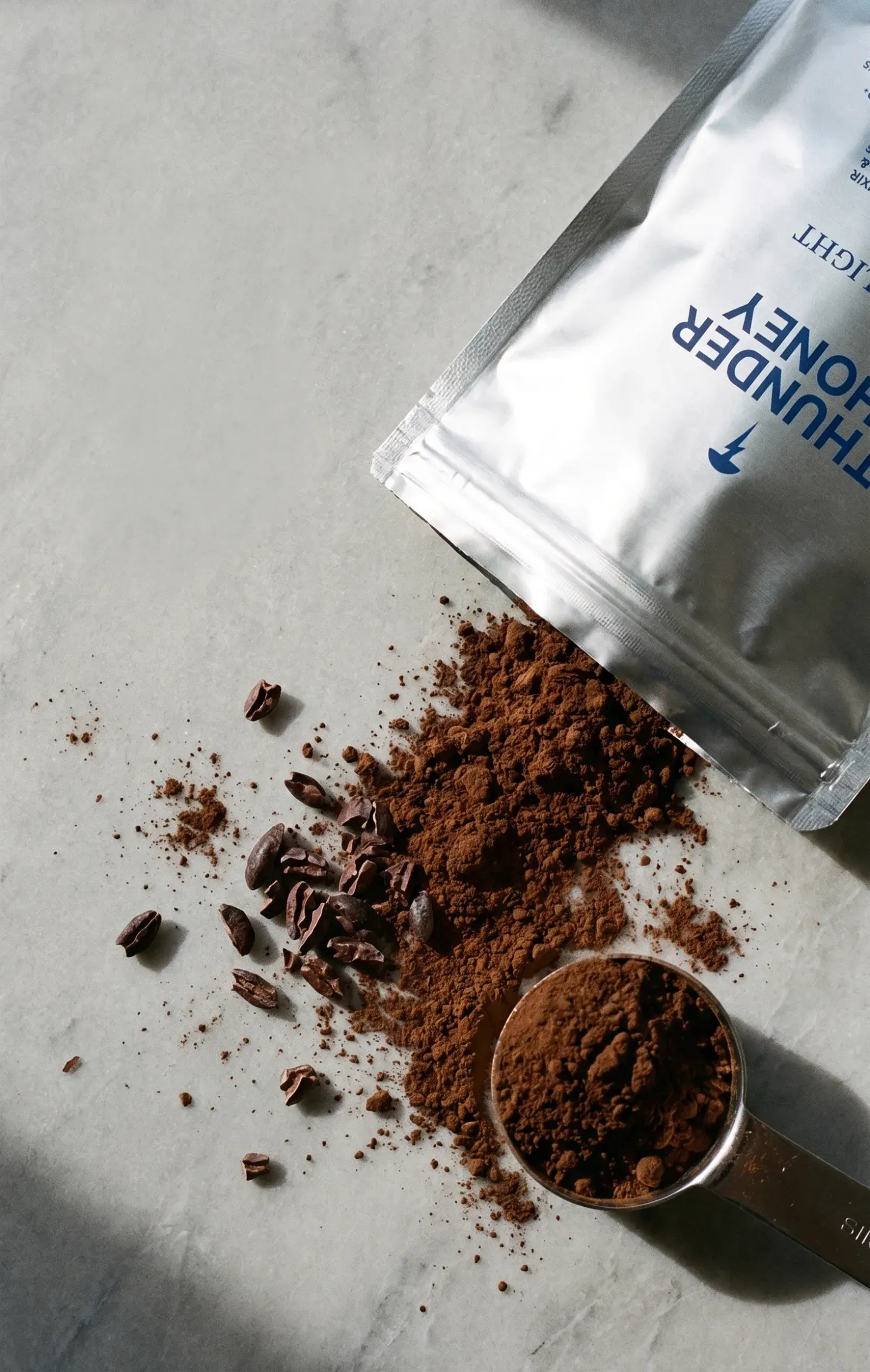
This is the principle behind Thunder Honey Daylight. It is made without added caffeine, so there is little adenosine masking and no cortisol borrow, which means little or nothing to pay back at 2pm. Instead it is composed with 11 actives at meaningful doses, cordyceps and a 300 mg nicotinamide riboside dose among them. Nicotinamide riboside is a form of niacin (vitamin B3), and niacin contributes to normal energy-yielding metabolism and to the reduction of tiredness and fatigue. That is the one authorised energy wording we use; the other actives we describe by composition and by what the research has explored. You still get the warm morning ritual, with a taste closer to a homemade hot chocolate than to coffee.
The takeaway
Coffee is a tool, and a good one for a short, sharp lift. But if your goal is even energy that lasts, it helps to know the difference between masking fatigue and building fuel. One borrows from your nervous system. The other supports the cells already doing the work. Choose based on the morning you actually want.
Coffee is a fine tool for a short, sharp lift, but it masks fatigue rather than building energy, and the loan comes due in the afternoon. Cellular energy is ATP made in your mitochondria, steady and yours. That is the design behind Daylight: no-added-caffeine, cordyceps and NAD+ described as the research describes them, niacin (vitamin B3) via NR for the authorised energy-metabolism and tiredness wording, and every milligram on the label.
References
- Fredholm, B. B., et al. (1999). Actions of caffeine in the brain with special reference to factors that contribute to its widespread use. Pharmacological Reviews, 51(1), 83-133.
- Lovallo, W. R., et al. (2005). Caffeine stimulation of cortisol secretion across the waking hours. Psychosomatic Medicine, 67(5), 734-739.
- Hirsch, K. R., et al. (2017). Cordyceps militaris improves tolerance to high-intensity exercise. Journal of Dietary Supplements, 14(1), 42-53.
- Martens, C. R., et al. (2018). Chronic nicotinamide riboside supplementation elevates NAD+ in healthy middle-aged and older adults. Nature Communications, 9, 1286.
This article is for educational purposes and is not medical advice. Daylight is a food supplement. If you take prescription medication or are pregnant or breastfeeding, talk to your doctor before starting.