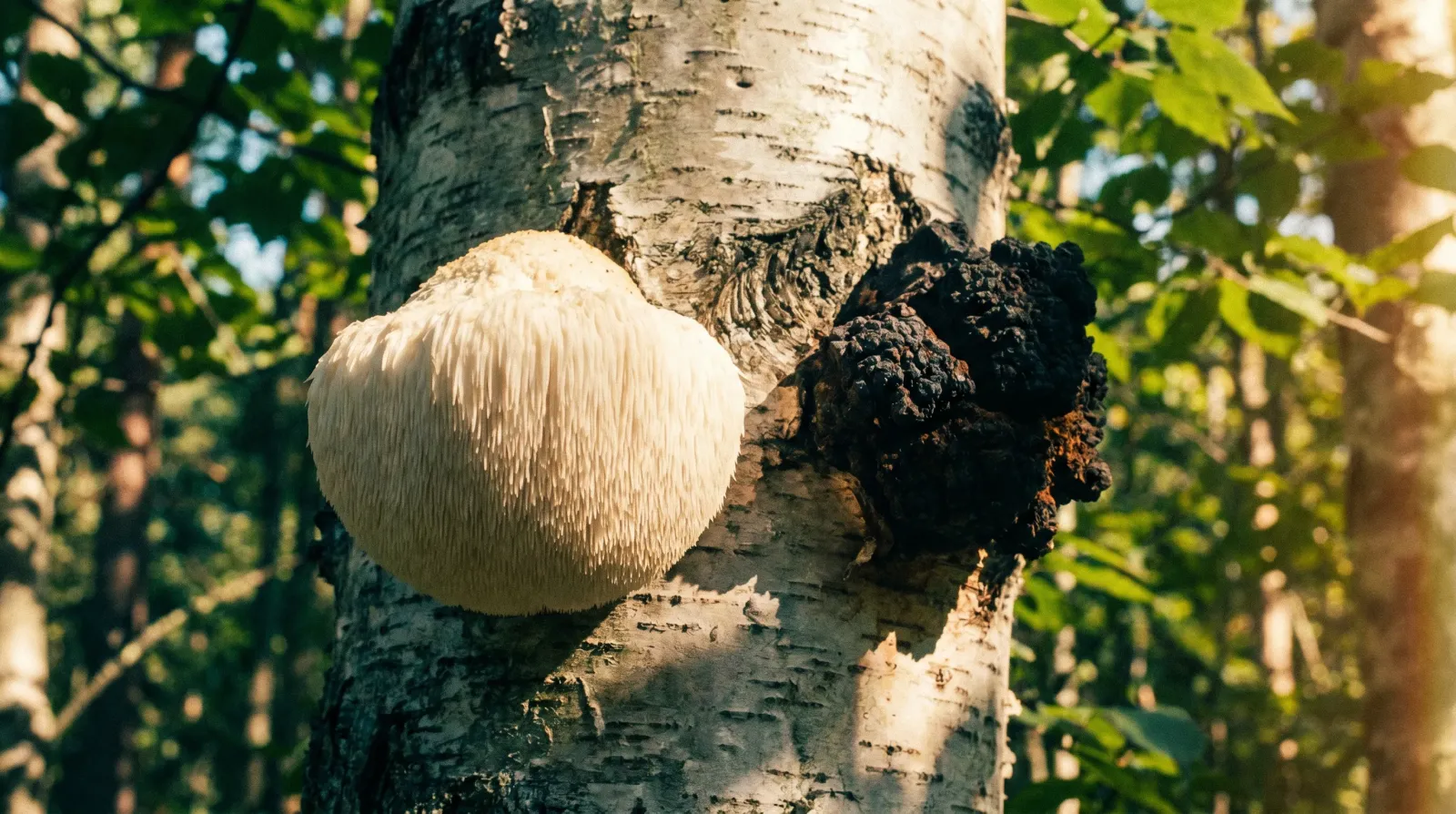
Chaga (Inonotus obliquus) is the dark, charcoal-looking growth that forms on birch trees in cold northern forests. It does not look like a mushroom and it does not behave like one in the kitchen. What it is known for is density: by some laboratory measures it is among the most antioxidant-rich substances ever tested. That headline is true and also frequently misused, so it is worth understanding properly.
What the antioxidant claim really means
Chaga scores extremely high on a lab assay called ORAC, which measures a substance's capacity to neutralise free radicals in a test tube. The number is real. The catch is that an ORAC score measures activity in a dish, not necessarily what happens after digestion in a living body. A high antioxidant capacity is a reason to be interested, not proof of a clinical benefit. Honest framing keeps both facts in view at once.
The compounds worth knowing
Chaga's activity comes mainly from two groups. Polysaccharides, especially beta-glucans, are the water-soluble compounds most studied in the laboratory literature. Triterpenes such as betulinic acid, which chaga concentrates from the birch it grows on, are alcohol-soluble. Because the prized compounds sit on both sides of the solubility line, chaga is a textbook case for dual-extraction: a single method leaves half the profile behind.
Chaga is genuinely one of the most antioxidant-dense foods measured, but a test-tube score is not a clinical outcome. Its useful compounds split between water-soluble beta-glucans and alcohol-soluble triterpenes, so dual-extraction matters. Sourcing matters too: wild birch chaga from cold forests is the real thing.
What the evidence supports, and what it does not
Most chaga research is still preclinical, meaning cell and animal studies rather than large human trials. That work has explored antioxidant activity and effects on immune-cell markers in the lab, which is a reasonable basis for scientific interest, not a basis for any health claim. What it does not support are the disease-curing claims that sometimes attach to chaga online. The correct posture is the same one we apply to every ingredient: a plausible mechanism, encouraging early data, and no overpromising about outcomes the human studies have not established.
Why sourcing matters
Chaga draws much of its character from the birch it parasitises and the cold climate it grows in. Wild-harvested chaga from northern birch forests is the genuine article. Cultivated mycelium grown in a tank is a different and weaker product, and as with all functional mushrooms, the cheapest versions are often mycelium on grain with little of the active material the label implies.
How we use it in Daylight
Thunder Honey Daylight includes 1,000 mg of dual-extracted Chaga per scoop, printed plainly on the label. It sits alongside Lion's Mane and Cordyceps in a no-added-caffeine stack. Chaga carries no authorised EU health claim, so we describe the composition and the research rather than promising an effect. Developed in Sweden and third-party tested, the formula is built so you can read exactly what you are getting, the species, the ratio and the milligrams.
Chaga is a remarkable antioxidant food with promising but still mostly preclinical evidence. Treat the giant ORAC number as a reason for interest, not a clinical promise. Insist on real wild birch chaga, dual-extracted, with the dose on the label. That is where the value actually lives.
References
- Geng, Y., et al. (2017). Total phenolic content and antioxidant activity of Inonotus obliquus. Molecules, 22(7), 1141.
- Lemieszek, M. K., et al. (2011). Anticancer effects of fraction isolated from fruiting bodies of chaga mushroom. Nutrition and Cancer, 63(8), 1313-1320.
- Szychowski, K. A., et al. (2021). Inonotus obliquus: from folk medicine to clinical use. Journal of Traditional and Complementary Medicine, 11(4), 293-302.
This article is for educational purposes and is not medical advice. Daylight is a food supplement. If you take prescription medication or are pregnant or breastfeeding, talk to your doctor before starting.