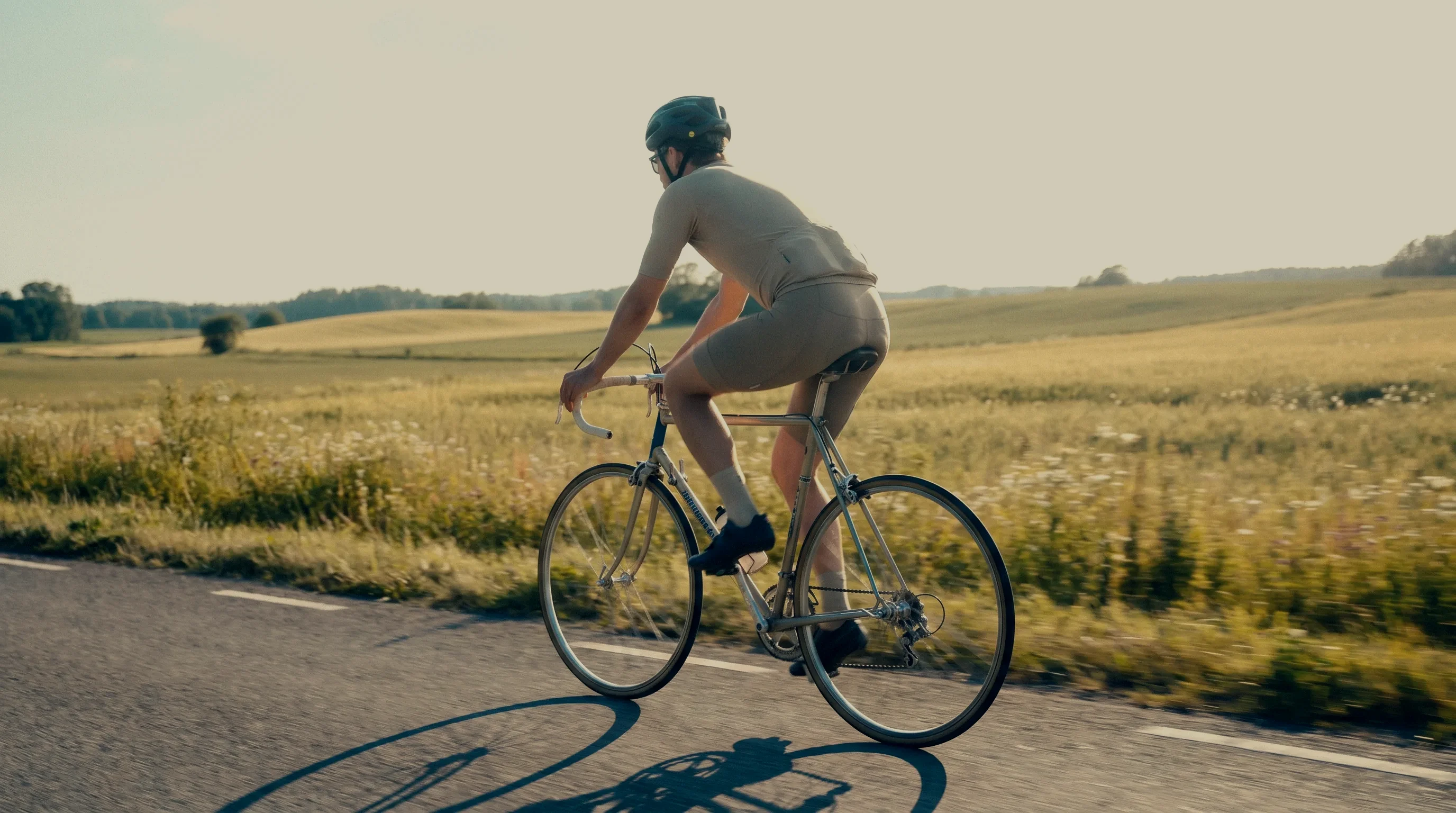
Walking is the protocol nobody can sell you, which is roughly why it gets so little airtime in biohacking circles. There is no device, no subscription and no supplement attached to it. There is also more good evidence behind it than behind most of what does get sold.
Where the 10,000-step number came from
It did not come from a study. It came from a 1960s Japanese pedometer marketed as the manpo-kei, which translates roughly as "10,000-step meter". The number was chosen partly because the Japanese character for 10,000 looks like a walking figure. It stuck for sixty years because it is memorable, not because it is a threshold.
The actual data is more forgiving and more interesting. A 2022 meta-analysis in The Lancet Public Health pooled fifteen cohorts covering roughly 47,000 adults and found that mortality risk dropped steeply as daily steps rose, then flattened out. For adults aged 60 and over the curve plateaued at around 6,000 to 8,000 steps a day. For adults under 60 it plateaued at roughly 8,000 to 10,000. Going beyond the plateau did not add much. Going from very low counts up toward it added a great deal.
The big win in walking is escaping the bottom of the range, not reaching a round number. Most of the mortality benefit is already banked somewhere between 6,000 and 8,000 steps a day. A short walk after eating does something extra that a single long walk does not. And walking reliably improves the kind of loose, associative thinking that sitting suppresses.
The post-meal walk does a different job
Total daily steps and when you take them are separate questions. A 2022 review in Sports Medicine looked at light-intensity walking broken into short bouts after eating and found that even two to five minutes of easy walking following a meal produced a meaningfully flatter blood glucose curve than sitting still, and did so better than standing.
The mechanism is unglamorous. Contracting muscle pulls glucose out of the blood through a pathway that does not require insulin to do the asking. Walk after eating and some of the sugar in that meal goes straight into working muscle instead of circulating. It is one of the few interventions in this whole space where the effort is trivial and the effect shows up on a sensor within twenty minutes.
Walking as a thinking tool
In a 2014 set of experiments at Stanford, Oppezzo and Schwartz put people through standard tests of divergent thinking, the "how many uses can you find for this object" kind, while seated and while walking. Walking increased creative output substantially, on the order of 60 per cent in their tests, and the effect persisted for a short time after sitting back down. It did not improve focused, single-answer problem solving. That distinction is worth keeping: a walk is a tool for opening a problem up, not for closing it down.
How to use this
- Aim for the plateau, not the trophy. If you are at 3,000 steps, getting to 7,000 is where nearly all the benefit lives. Chasing 15,000 is optional.
- Put five minutes after each main meal. This is the highest return-per-minute item in the article. Around the block is enough.
- Take the hard conversation for a walk. Use it for the thinking that needs room, not for the task that needs concentration.
- Stack it with light. A morning walk is also a morning light dose, which is two protocols for the price of one.
Walking is not exciting and it is not a substitute for training. It is the base layer everything else sits on, the benefit curve is steepest at the low end, and the after-meal version is the single cheapest metabolic intervention available to most people.
References
- Paluch, A. E., et al. (2022). Daily steps and all-cause mortality: a meta-analysis of 15 international cohorts. The Lancet Public Health, 7(3), e219-e228.
- Buffey, A. J., et al. (2022). The acute effects of interrupting prolonged sitting time with standing and light-intensity walking on postprandial glycemia and insulinemia. Sports Medicine, 52, 1765-1787.
- Oppezzo, M., & Schwartz, D. L. (2014). Give your ideas some legs: the positive effect of walking on creative thinking. Journal of Experimental Psychology: Learning, Memory, and Cognition, 40(4), 1142-1152.
This article is for educational purposes and is not medical advice. Talk to your doctor before starting any new protocol, especially if you have a medical condition, take medication, or are pregnant. Daylight is a food supplement and nothing here is a claim about what it does.