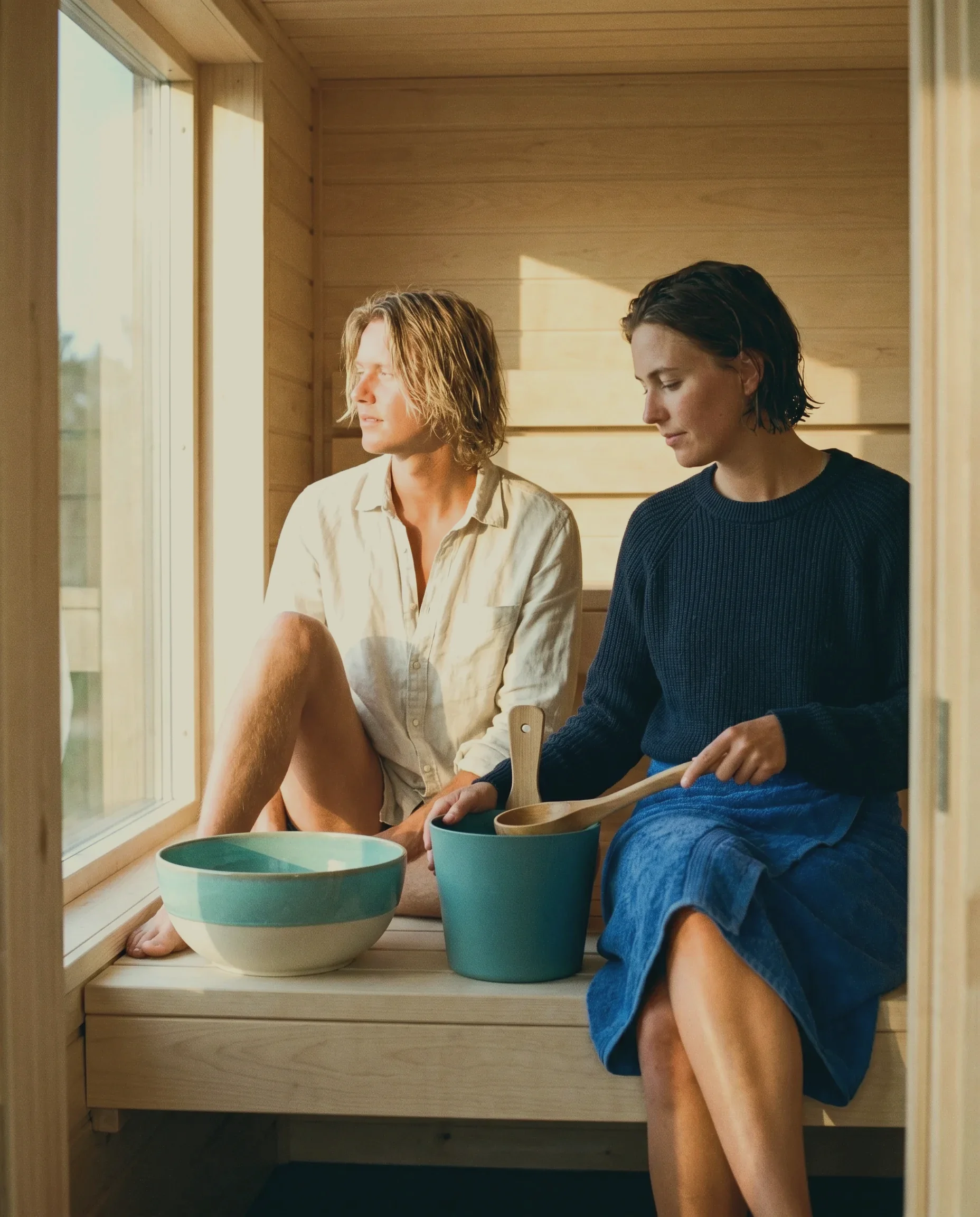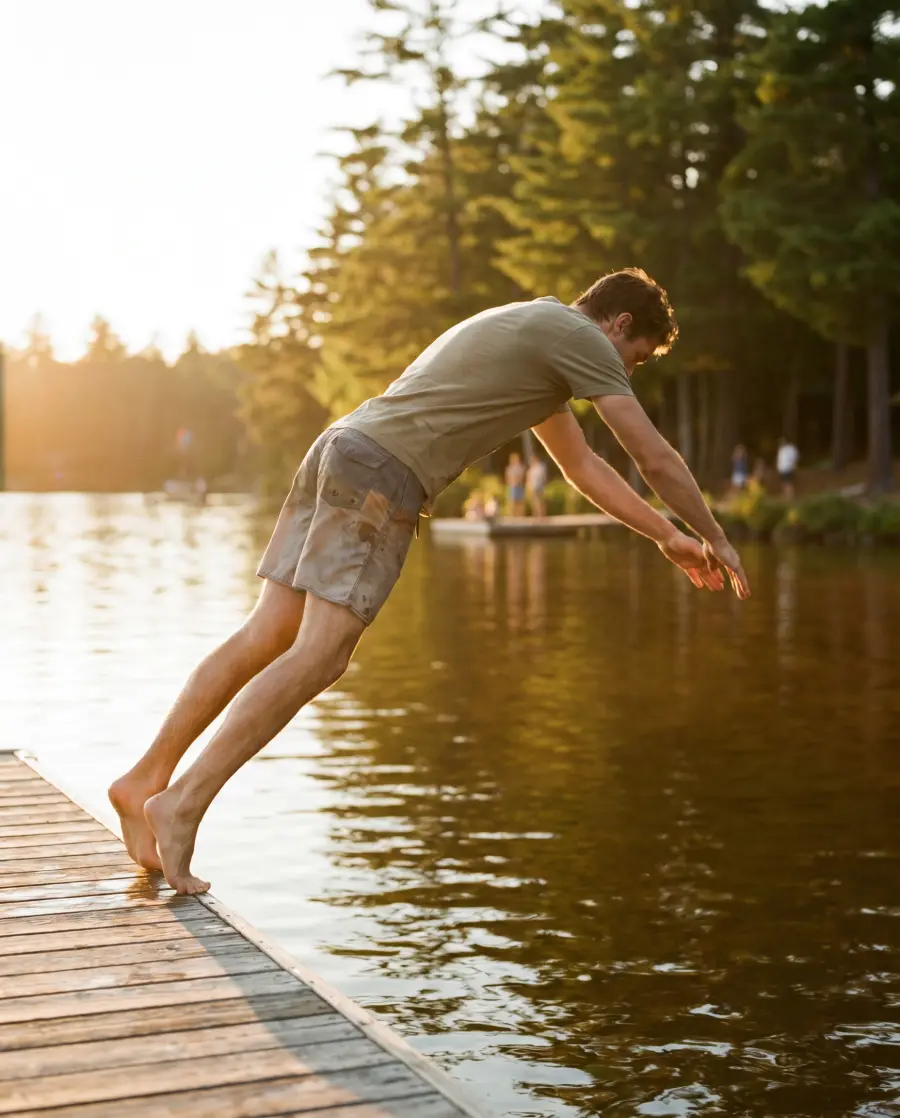
In Sweden the sauna-then-lake sequence is not a protocol, it is a Tuesday. It has been reframed in the last decade as "contrast therapy" and given a set of claims it does not always deserve. The practice is genuinely good. Some of the claims around it are not.
What contrast therapy actually is
Alternating heat and cold, usually several cycles, usually ending on one or the other depending on what you are after. Heat dilates peripheral blood vessels and drives blood toward the skin. Cold constricts them and drives blood back toward the core. Alternate the two and you get a rhythmic pumping of blood through the periphery, which is the mechanism most of the recovery claims rest on.
The honest position on that mechanism: it is real, it is measurable, and the leap from "blood moves" to "you recover faster" is bigger than most people selling it admit. A 2010 review in the British Journal of Sports Medicine looking at contrast water therapy for muscle soreness found modest benefits over passive recovery, with substantial variation between studies and small sample sizes throughout. Modest and real is still worth having. It is not transformative.
Heat has the strongest standalone evidence, largely from Finnish sauna cohort data. Contrast cycling has modest evidence for feeling recovered. And there is one clear case where cold is counterproductive: immediately after strength training, when it measurably blunts the adaptation you just trained for.
The heat side has the better evidence
The strongest data in this area is not about contrast at all, it is about sauna frequency on its own. A 2015 prospective cohort study published in JAMA Internal Medicine followed roughly 2,300 middle-aged Finnish men for two decades and found that men using a sauna four to seven times a week had markedly lower rates of cardiovascular and all-cause mortality than men using it once a week. This is observational data, so it cannot prove the sauna caused the difference, and people who sauna often may differ in other ways. But the dose-response pattern was consistent and the study is the reason heat exposure is taken seriously at all.
The one case where cold works against you
If your session was strength training, do not finish it in cold water. In a 2015 study in The Journal of Physiology, Roberts and colleagues put trained men through twelve weeks of resistance training with either cold water immersion or active recovery afterwards. The cold group ended the trial with smaller gains in muscle mass and strength. Follow-up work pointed to blunted signalling in the pathways that build muscle protein.
The logic is straightforward once stated. Training creates inflammation, and that inflammation is part of the signal that tells the muscle to adapt. Cold suppresses inflammation. Suppress the signal and you suppress the adaptation. Cold after training makes you feel better and adapt less.
This does not apply to endurance work in the same way, and it does not apply at all if the cold session is separated from training by several hours or done on a rest day. It is a timing rule, not a ban.
Where this stops being a lifestyle choice. Sudden cold immersion causes an involuntary gasp and a sharp rise in heart rate and blood pressure. If you have a heart condition, uncontrolled high blood pressure, or are pregnant, talk to your doctor before doing any of this. Never plunge alone in open water, and never combine forceful breathwork with immersion.
How to use this
- Default sequence: heat first, then cold, two or three cycles, finishing however you prefer. Nobody has shown a decisive advantage to a particular ending.
- After lifting, skip the cold or leave at least four to six hours between the session and the plunge.
- After endurance work or on a rest day, contrast away. This is where it earns its reputation.
- Treat the heat as the main event. If you only do one of the two, the sauna has the better evidence behind it. See the full sauna guide.
Contrast therapy feels excellent and carries modest evidence for recovery. Heat on its own has the stronger data. Cold has one clear cost: taken straight after strength training it reduces the gains. Enjoy the ritual, mind the timing, respect the cardiovascular caution.
References
- Laukkanen, T., Khan, H., Zaccardi, F., & Laukkanen, J. A. (2015). Association between sauna bathing and fatal cardiovascular and all-cause mortality events. JAMA Internal Medicine, 175(4), 542-548.
- Roberts, L. A., et al. (2015). Post-exercise cold water immersion attenuates acute anabolic signalling and long-term adaptations in muscle to strength training. The Journal of Physiology, 593(18), 4285-4301.
- Bleakley, C. M., & Davison, G. W. (2010). What is the biochemical and physiological rationale for using cold-water immersion in sports recovery? A systematic review. British Journal of Sports Medicine, 44(3), 179-187.
This article is for educational purposes and is not medical advice. Talk to your doctor before starting any new protocol, especially if you have a medical condition, take medication, or are pregnant. Daylight is a food supplement and nothing here is a claim about what it does.